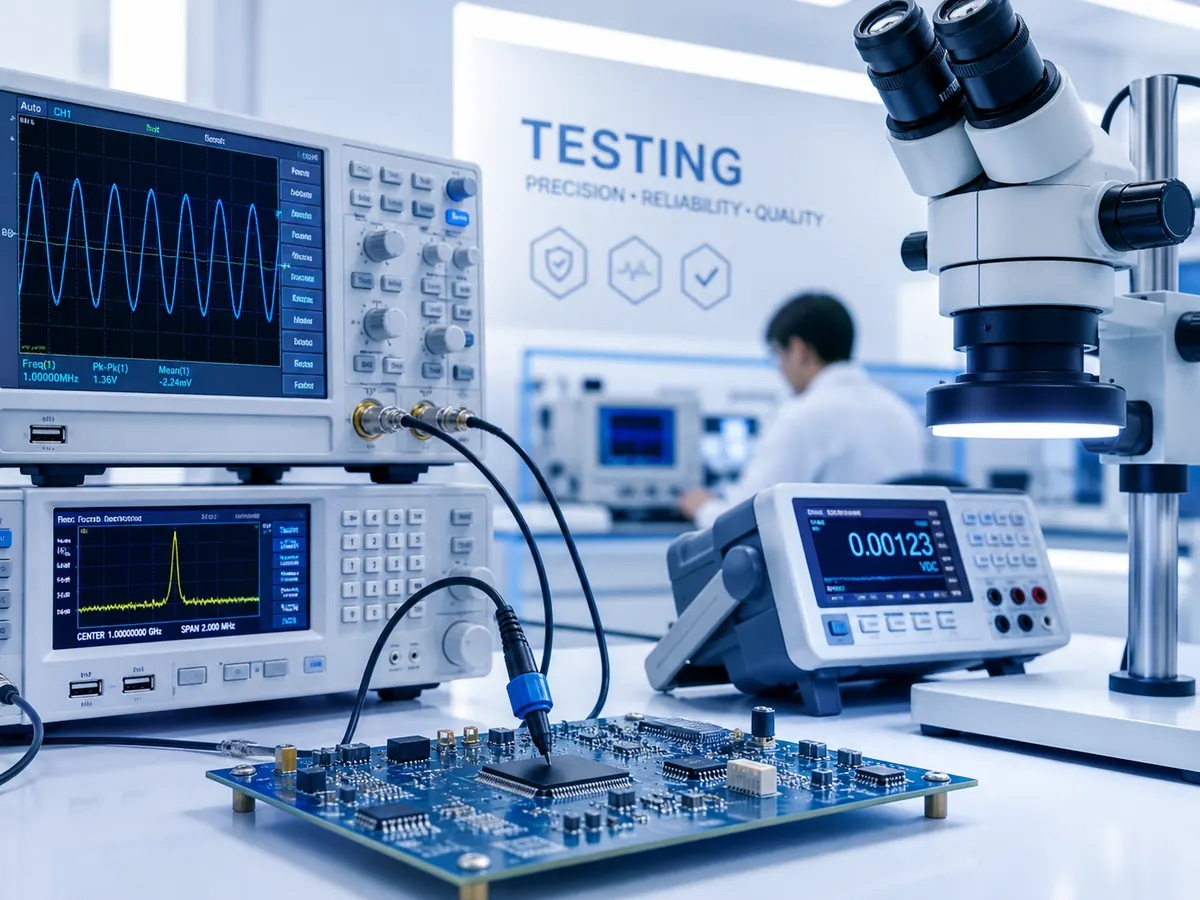
A testing laboratory serves as the critical backbone of quality assurance, providing empirical data that validates product safety, performance, and regulatory compliance. By leveraging advanced analytical techniques and stringent operational protocols, these facilities transform raw materials and finished goods into verified assets ready for global distribution. The integration of precise measurement, standardized methodologies, and continuous technical improvement ensures that every test result holds absolute integrity and traceability.
Core Functions and Operational Framework of a Testing Laboratory
Analytical and Performance Testing
The primary function revolves around evaluating the physical, chemical, and mechanical properties of products. This involves subjecting specimens to controlled stressors to determine their behavior under expected and extreme conditions. Performance testing verifies whether a product meets the specific design parameters and functional requirements dictated by industry standards.
- Mechanical stress analysis to assess durability and load-bearing capacity.
- Chemical composition verification to detect hazardous substances or confirm material purity.
- Electrical performance evaluation for consumer electronics and industrial components.
Environmental and Reliability Assessment
Products must endure diverse environmental conditions throughout their lifecycle. Reliability assessment simulates these real-world scenarios to predict product longevity and failure rates. By exposing items to temperature fluctuations, humidity, UV radiation, and corrosive elements, the laboratory identifies potential weaknesses before mass production or market release.
Quality Management and Accreditation Standards
ISO/IEC 17025 Compliance
Operating a credible testing laboratory requires strict adherence to ISO/IEC 17025, the international standard for the competence of testing and calibration laboratories. This framework mandates a comprehensive quality management system that covers organizational structure, personnel competence, equipment maintenance, and document control. Achieving and maintaining this accreditation demonstrates technical competence and ensures the global acceptance of test reports.
Method Validation and Uncertainty Measurement
Every test conducted must rely on validated methods that are scientifically sound and reproducible. Method validation establishes the performance characteristics of a procedure, including accuracy, precision, specificity, and limit of detection. The validation process follows a systematic sequence:
- Define the intended use and performance requirements of the analytical method.
- Conduct collaborative studies to determine precision, bias, and linearity.
- Establish the limit of detection and limit of quantification for target analytes.
- Document the validation protocol and calculate the measurement uncertainty.
Equipment Calibration and Technical Infrastructure
The accuracy of any test result is directly tied to the precision of the instruments used. A robust technical infrastructure requires a rigorous calibration program traceable to national or international measurement standards.
| Equipment Category | Calibration Frequency | Traceability Standard |
|---|---|---|
| Spectrometers | Annually | NIST / ISO 17025 |
| Tensile Testers | Bi-annually | National Metrology Institute |
| Environmental Chambers | Annually | ISO/IEC 17025 |
| Dimensional Gauges | Quarterly | Calibrated Reference Standards |
Third-Party Testing and Global Market Compliance
Regulatory Alignment and Certification Support
Navigating the complex landscape of international regulations is a significant challenge for manufacturers. Third-party testing laboratories bridge this gap by aligning their test protocols with regional mandates such as CE marking for Europe, FCC for the United States, and CCC for China. This alignment ensures that products not only pass initial quality checks but also satisfy the legal prerequisites for seamless market entry.
Supply Chain Quality Control
Beyond final product verification, testing laboratories play a pivotal role in supply chain management. By inspecting raw materials and intermediate components, they prevent defective inputs from compromising the final output. This proactive approach reduces waste, minimizes recall risks, and builds trust between manufacturers, suppliers, and end consumers.
Strategic Value of Laboratory Testing in Modern Industry
The integration of rigorous testing protocols within the product development lifecycle fundamentally elevates brand reputation and consumer trust. Empirical validation mitigates financial risks associated with product failures and regulatory penalties. By relying on accredited data, companies can accelerate time-to-market, optimize manufacturing processes, and confidently expand into new international territories. The laboratory thus transitions from a mere compliance checkpoint to a strategic partner driving continuous product innovation and market competitiveness.
About Belling Global
Belling Global delivers integrated Testing, Inspection and Certification solutions to help businesses ensure compliance, reduce risk and strengthen supply-chain quality control for seamless access to global markets. Our state-of-the-art facilities are equipped with cutting-edge analytical instruments and operated by a team of highly specialized technical experts. We leverage advanced automation and precise data analytics to provide rapid, accurate, and globally recognized test results across diverse industry sectors.
Welcome to contact professional engineers at Belling Global to discuss your specific testing requirements and discover how our comprehensive TIC solutions can support your business growth and regulatory compliance.