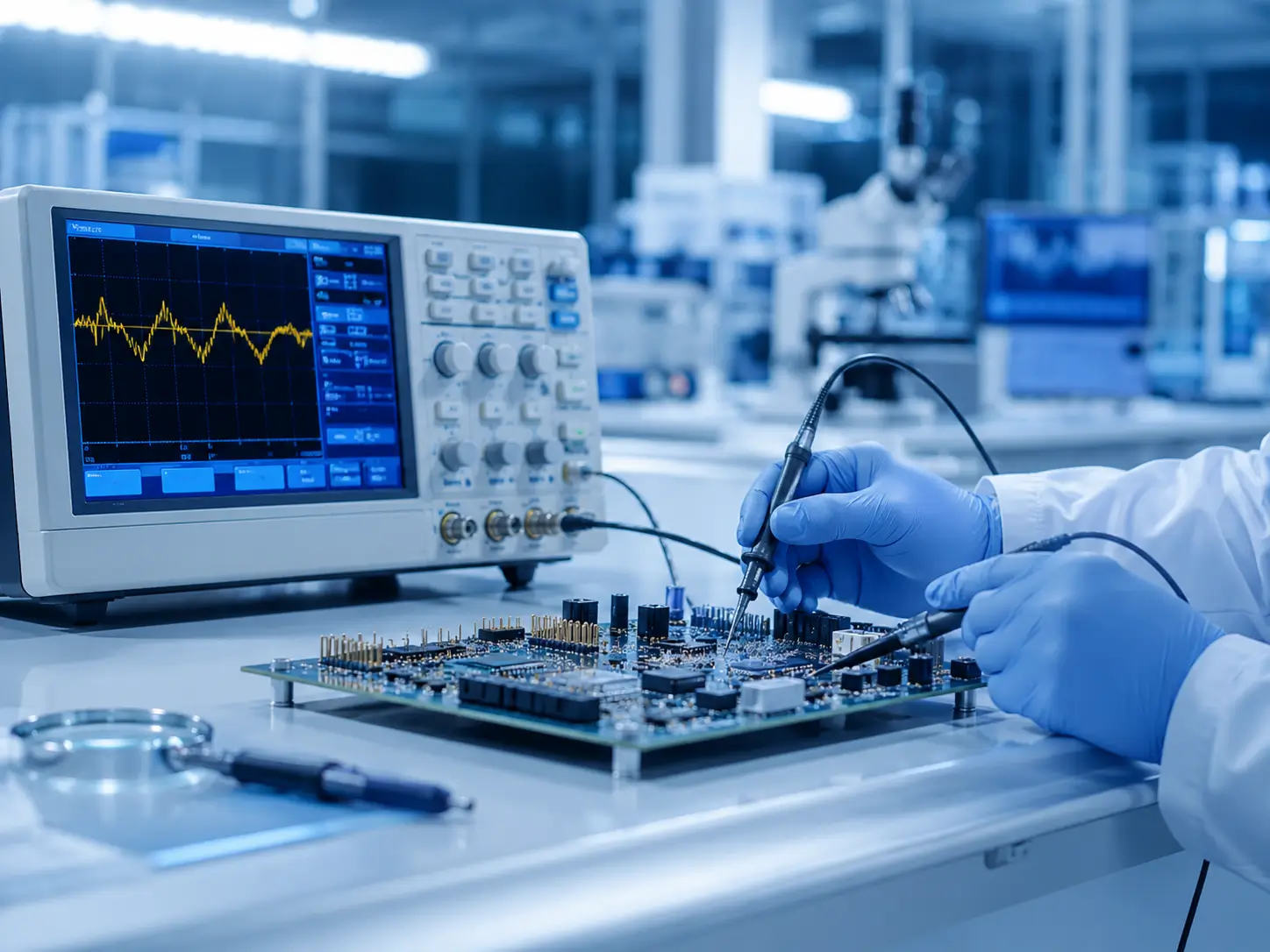
Achieving and maintaining competence in testing and calibration requires a robust framework that guarantees the accuracy, reliability, and traceability of results. The ISO/IEC 17025 standard serves as the globally recognized benchmark for laboratories, establishing stringent criteria for management systems and technical operations. Organizations relying on third-party testing depend heavily on this accreditation to validate product safety, ensure regulatory compliance, and mitigate supply chain risks. Understanding the intricate details of this standard is essential for laboratories aiming to deliver precise analytical data and for businesses seeking trustworthy certification partners.
Core Principles of ISO 17025 Laboratory Standards
The standard is fundamentally divided into two main sections that address both the operational management and the technical execution of laboratory activities.
Management System Requirements
A compliant management system ensures that the laboratory operates with integrity, consistency, and impartiality. This section aligns closely with ISO 9001 principles but includes specific additions tailored to laboratory environments.
- Impartiality and Confidentiality: Laboratories must identify risks to their impartiality on an ongoing basis and implement measures to eliminate or minimize these risks. Client information and proprietary data require strict confidentiality protocols.
- Document Control: All policies, procedures, and specifications must be authorized, managed, and readily available to personnel. This includes rigorous control over external documents and records.
- Corrective Actions and Risk Management: When nonconformities occur, the laboratory must investigate the root cause, implement corrective actions, and evaluate the effectiveness of these actions. Risk-based thinking is integrated into all processes to prevent potential failures.
Technical Competence and Methodology
Technical requirements form the backbone of laboratory credibility, focusing on the personnel, facilities, and equipment used to generate valid results.
| Technical Element | Key Focus Areas | Impact on Testing Quality |
|---|---|---|
| Personnel Competence | Education, qualifications, training, and authorized supervision. | Ensures analysts possess the necessary skills to perform complex tests accurately. |
| Facilities and Environmental Conditions | Temperature, humidity, dust control, and electromagnetic interference monitoring. | Prevents environmental factors from adversely affecting measurement outcomes. |
| Equipment and Metrological Traceability | Calibration, verification, maintenance, and traceability to SI units. | Guarantees that measurement results can be related to international reference standards. |
Key Benefits of ISO 17025 Accreditation
Adopting this rigorous framework provides substantial advantages for both the testing facility and the clients utilizing their services.
Enhancing Data Reliability and Trust
Clients require absolute confidence in the test reports they receive. Accreditation demonstrates a commitment to producing technically valid results.
- Reduced Measurement Uncertainty: By strictly controlling equipment and environmental conditions, laboratories minimize variables that contribute to measurement errors.
- Standardized Method Validation: Before implementing new test methods, laboratories must validate them to prove they are fit for purpose, ensuring consistent performance across different batches and operators.
- Proficiency Testing Participation: Regular comparison with other laboratories through inter-laboratory comparisons provides objective evidence of technical competence.
Facilitating Global Market Access
Products tested in an accredited laboratory are more readily accepted by regulatory bodies and international buyers. The International Laboratory Accreditation Cooperation (ILAC) manages mutual recognition arrangements, meaning a test report from an accredited facility in one country is recognized in another, significantly reducing the need for redundant testing and accelerating time-to-market.
Critical Steps for Laboratory Implementation
Transitioning to full compliance requires a systematic approach to upgrading both infrastructure and operational mindsets.
Gap Analysis and Resource Allocation
The initial phase involves a comprehensive review of existing procedures against the standard’s clauses. This gap analysis identifies deficiencies in documentation, equipment calibration status, and staff training records. Management must then allocate sufficient financial and human resources to address these gaps, upgrading software for LIMS (Laboratory Information Management Systems) and procuring advanced calibration tools where necessary.
Method Validation and Measurement Uncertainty
Two of the most technically demanding aspects of the standard involve proving the capability of test methods and quantifying the doubt associated with measurement results.
- Validation Parameters: Laboratories must evaluate specificity, linearity, accuracy, precision, limit of detection, and robustness for non-standard or modified methods.
- Uncertainty Budgets: Technicians must identify all potential sources of uncertainty, including reference standards, environmental fluctuations, and operator repeatability, combining them mathematically to report a comprehensive uncertainty value alongside the final result.
Summary of Laboratory Excellence
Attaining and sustaining accreditation under this standard represents a profound commitment to scientific rigor and operational excellence. It transforms a testing facility from a simple service provider into a strategic partner capable of safeguarding product integrity. By embedding risk management, ensuring metrological traceability, and fostering a culture of continuous improvement, laboratories deliver the precise, defensible data required in today’s highly regulated global trade environment.
About Belling Global
Belling Global delivers integrated Testing, Inspection and Certification solutions to help businesses ensure compliance, reduce risk and strengthen supply-chain quality control for seamless access to global markets. Our state-of-the-art facilities are equipped with advanced analytical instruments, including high-resolution mass spectrometers, automated tensile testing systems, and climate-controlled environmental chambers. Our team of highly qualified scientists and engineers leverages cutting-edge technology to provide accurate, rapid, and compliant testing services across multiple industry sectors. Welcome to contact our professional engineers to discuss your specific testing requirements and discover how our technical expertise can support your quality assurance objectives.