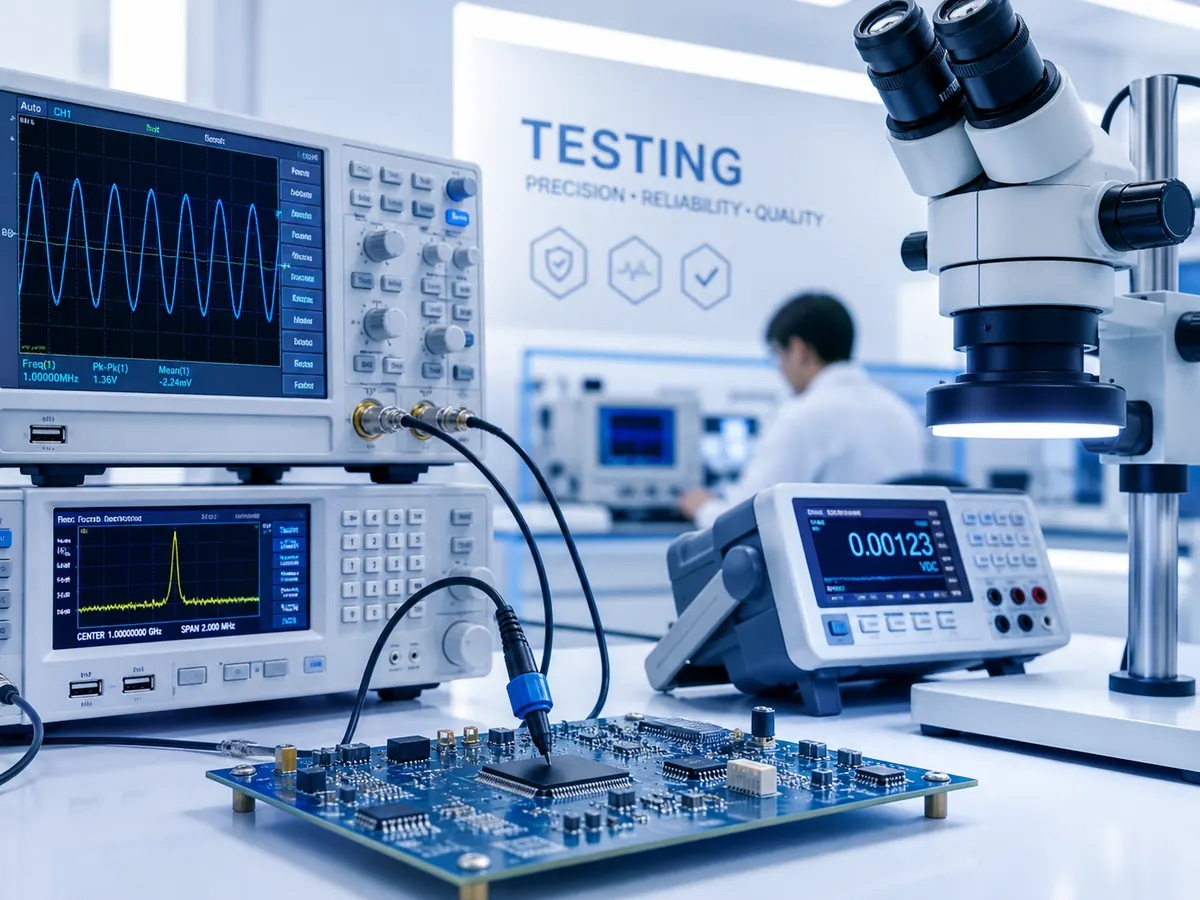
Core Definition and Mechanism of Third Party Testing
What Exactly Constitutes a Third Party?
A third party refers to an independent entity that has no direct financial or operational interest in the product being evaluated. Unlike first party testing (conducted by the manufacturer) or second party testing (conducted by the purchaser), a third party operates with strict impartiality. This independence eliminates conflicts of interest, ensuring that the test results reflect the true quality and safety of the product without internal bias or commercial pressure.
The Testing Mechanism and Workflow
The testing process follows a rigorous, standardized workflow designed to maintain data integrity and reproducibility. The typical lifecycle involves:
- Sample Collection: Random sampling from production batches to ensure statistical validity and representativeness.
- Standard Identification: Matching the product with applicable regional and international regulatory frameworks.
- Laboratory Execution: Conducting physical, chemical, or electrical tests using highly calibrated equipment.
- Data Analysis and Reporting: Generating comprehensive, legally defensible test reports for regulatory submission.
Strategic Importance for Global Supply Chains
Regulatory Compliance and Market Access
Different global markets enforce unique regulatory frameworks. For instance, the European Union mandates CE marking, while the United States requires FCC certification for electronics and CPSC compliance for consumer goods. Third party testing provides the empirical evidence required to demonstrate conformity, preventing costly customs detentions, product recalls, and market entry delays.
Risk Mitigation and Brand Protection
Substandard products can lead to severe liabilities, including personal injury claims and irreparable brand damage. Independent testing identifies design flaws, material defects, and manufacturing inconsistencies before the product reaches the end user. This proactive risk management shields companies from financial losses and legal repercussions while reinforcing consumer trust.
| Testing Type | Conducted By | Primary Objective | Level of Impartiality |
|---|---|---|---|
| First Party | Manufacturer | Internal Quality Control | Low (Inherent Bias) |
| Second Party | Purchaser/Buyer | Supplier Verification | Medium (Commercial Interest) |
| Third Party | Independent Lab | Regulatory & Market Compliance | High (Strictly Impartial) |
Key Industries and Specific Testing Parameters
Consumer Electronics and Electrical Safety
Electronic devices must undergo rigorous evaluations to prevent fire hazards and electrical shocks. Key parameters include dielectric strength, ground continuity, insulation resistance, and electromagnetic compatibility (EMC). These tests ensure that devices operate safely under various environmental conditions without interfering with other electronic equipment or posing risks to users.
Textiles, Apparel, and Chemical Compliance
The textile industry faces strict chemical restrictions, such as the REACH regulation in Europe and CPSIA in the US. Testing focuses on identifying restricted substances like azo dyes, heavy metals, formaldehyde, and phthalates. Additionally, physical performance tests evaluate colorfastness, tensile strength, and flammability to guarantee consumer safety and product durability.
Medical Devices and Life Sciences
Medical equipment requires the highest level of scrutiny. Testing protocols assess biocompatibility, sterilization efficacy, and mechanical performance. Compliance with ISO 13485 and FDA regulations is mandatory, and independent laboratories provide the precise data necessary to secure regulatory approvals for life-saving devices and diagnostic tools.
Selecting the Right Testing Partner
Accreditation and Technical Competence
A reliable testing partner must hold relevant accreditations, such as ISO/IEC 17025, which demonstrates technical competence and the ability to produce precise, internationally recognized results. The laboratory should possess advanced instrumentation and employ highly qualified technical personnel capable of interpreting complex regulatory requirements.
Global Recognition and Turnaround Time
The chosen laboratory should have mutual recognition agreements (MRAs) with international bodies, ensuring that test reports are accepted globally without the need for re-testing. Furthermore, efficient turnaround times are crucial for maintaining supply chain momentum without compromising the thoroughness and accuracy of the evaluation.
Summary of Third Party Testing Value
Independent evaluation forms the backbone of modern quality assurance and regulatory compliance. By providing unbiased, scientifically validated data, it empowers businesses to navigate complex international trade regulations confidently. This systematic approach not only safeguards end-users from hazardous products but also fortifies brand reputation, ensuring long-term commercial success in highly competitive global markets.
About Belling Global
Belling Global delivers integrated Testing, Inspection and Certification solutions to help businesses ensure compliance, reduce risk and strengthen supply-chain quality control for seamless access to global markets. Backed by state-of-the-art laboratory facilities and advanced testing equipment, our technical team utilizes cutting-edge analytical instruments to execute precise evaluations across multiple industry sectors. Our robust quality management system guarantees data accuracy and operational efficiency. Welcome to contact our professional engineers for tailored testing solutions and expert technical consultation.